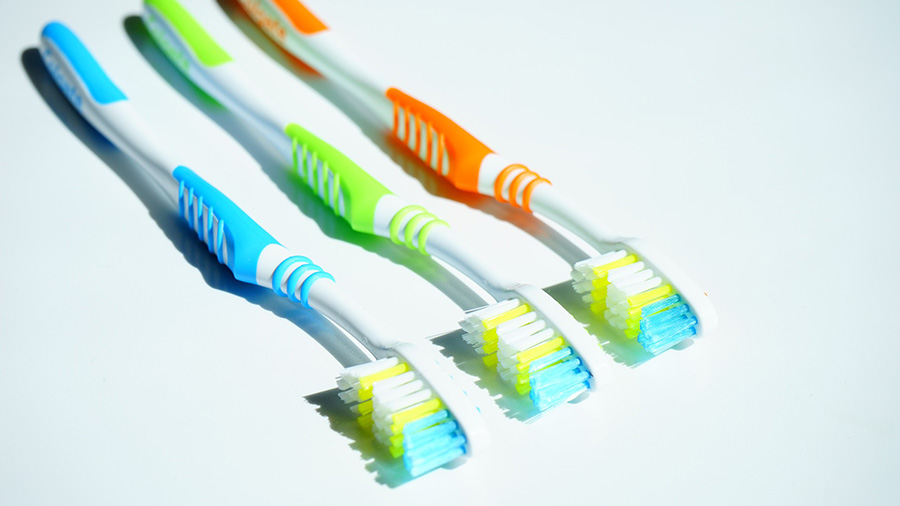
We hear the question about the right toothbrush almost every day in our practice. And the honest answer is: it depends. An expensive brush does not automatically clean better, and an inexpensive manual toothbrush can do an excellent job when used with good technique. That said, there are a few things you should look out for.
Manual toothbrushes: still a good choice
If you brush with the right technique, you do not necessarily need an electric toothbrush. What matters with manual toothbrushes: soft to medium bristles, a compact head and a replacement every six to eight weeks. Rounded bristle ends are gentle on the gums. We do not recommend hard bristles – they can wear away tooth enamel and cause the gums to recede.
The downside: most people brush for too short a time, apply too much pressure or miss certain areas altogether. This is where an electric brush can compensate for a great deal.
Electric: rotating or sonic?
With electric toothbrushes, there are essentially two systems.
Rotating brush heads (round head, familiar from Oral-B): the brush head rotates and oscillates at the same time, removing plaque very thoroughly. Stiftung Warentest, the German consumer organisation, regularly gives rotating models good ratings. Entry-level models from around 25 euros often perform barely any worse than the expensive versions with app connectivity and a display.
Sonic toothbrushes (elongated head, familiar from Philips Sonicare): they work with vibrations rather than rotation. Many patients find them more comfortable, particularly with sensitive gums. The cleaning performance is comparable – it is more a matter of personal preference.
Our impression from everyday practice: both systems work. What matters is that you enjoy using the brush and replace the heads regularly.
What to look for when buying
Do not be dazzled by extra features. A timer, pressure sensor and Bluetooth may sound appealing, but they are not essential. What really counts:
- A timer helps you stick to the recommended two minutes – almost all models now include one.
- A pressure sensor warns you if you press too hard. Useful, but no reason to pay three times the price.
- Replacement heads should be affordable and easy to obtain. Some manufacturers charge almost as much for four heads as for the brush itself.
Tip: in Stiftung Warentest reviews, models between 30 and 80 euros regularly achieve a "good" rating. More expensive devices rarely deliver measurably better cleaning.
What we see in our practice
Whether manual or electric: the most common mistakes are always the same. Too much pressure, too little time, and the spaces between the teeth are forgotten entirely. A toothbrush – whichever kind – only cleans around 60 to 70 per cent of the tooth surface. Without dental floss or interdental brushes, the interdental spaces remain untouched.
And of course, no toothbrush replaces professional teeth cleaning. Bacterial deposits that build up in hard-to-reach areas are difficult to remove completely at home.
Our recommendation
If you are unsure, simply ask us at your next appointment. We will examine your teeth and gums and recommend what suits your situation. Sometimes a good manual toothbrush with the right brushing technique is all you need – sometimes switching to an electric brush is the better way to go.
In the end, it is not the brush that counts, but the routine behind it.