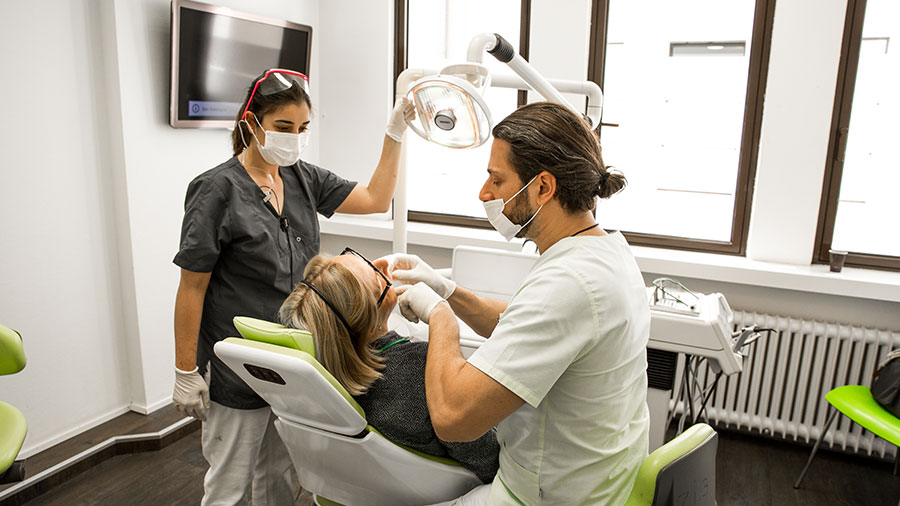
Dental prophylaxis: healthy teeth through regular care
Keeping your teeth healthy in the long term takes considerable effort and requires consistent, regular care. Even so, there are areas in the mouth that are very difficult or even impossible to reach, even with a first-class toothbrush and dental floss. Over time, this can lead to tooth decay and periodontitis, and the gums may become inflamed. The wisdom teeth and molars, as well as the spaces between the teeth, are usually affected the most.
Thorough cleaning through dental prophylaxis
Prophylaxis — also known as professional teeth cleaning — helps to preserve or restore a beautiful smile and healthy teeth and gums for as long as possible. It involves the professional care of the teeth, an intensive cleaning and a precise dental examination of the teeth and gums at the dental practice.
Regular professional teeth cleaning can help prevent pain, bleeding gums and other problems. Neither an ordinary toothbrush nor the best electric toothbrush can reach every spot in the mouth. During the treatment, the dentist uses special instruments to remove stubborn plaque and tartar. This helps to reduce the risk of dental disease.
Professional teeth cleaning is recommended once or twice a year. More frequent intensive cleaning should only be carried out in exceptional cases. Patients who are particularly prone to tooth decay or periodontitis benefit greatly from the treatment. If you suffer from severe discolouration, however, more frequent cleaning appointments are not necessarily the answer — Dr. Pantas and his team of dentists will be happy to advise you on professional teeth whitening.
The cost of dental prophylaxis ranges between 40 and 150 euros. Some statutory health insurance funds contribute at least part of the cost. Private supplementary dental insurance policies offer cover for this service under various tariffs.
How a dental prophylaxis treatment works
After a thorough examination of the teeth and mouth, the dentist decides how the treatment should proceed. He then gives the appropriate instructions to a specially trained member of staff, known as a prophylaxis assistant.
First, soft and hard deposits are removed from the teeth. This is done using ultrasonic devices and special hand instruments, as well as dental floss and brushes. Discolouration is removed with air-polishing devices, and rough areas are then polished. A paste containing fluoride is used for this, which helps to slow the build-up of new plaque. The gum pockets are cleaned with special scrapers, known as curettes. At the end of the treatment, the teeth are given a protective coating with a fluoride gel.
A professional teeth cleaning takes about an hour.